
Gyudon Japanese Beef Bowl is more than just a meal; it’s a culinary hug in a bowl, a symphony of savory flavors that transports you straight to the bustling streets of Tokyo. This iconic dish, a beloved staple in Japanese cuisine, has captured hearts for generations with its irresistible combination of tender, thinly sliced beef and sweet onions simmered in a delicate dashi-based sauce. Historically, Gyudon Japanese Beef Bowl gained immense popularity as a quick, affordable, and incredibly satisfying meal for busy workers, becoming synonymous with comfort food that’s both hearty and convenient.
It’s a testament to simple ingredients coming together to create something truly extraordinary. The melt-in-your-mouth texture of the beef, perfectly infused with the umami-rich broth, served generously over a bed of fluffy white rice, makes every spoonful an absolute delight. People adore this dish for its incredible depth of flavor, its comforting warmth, and the sheer convenience of preparing such a profound taste experience right in their own kitchen. Today, I’m thrilled to guide you through creating this authentic experience in your own home.

Ingredients:
- For the Beef and Sauce:
- 1 to 1.5 pounds (450-680g) thinly sliced beef: For the most authentic Gyudon Japanese Beef Bowl, look for very thinly sliced beef, often labeled “sukiyaki” or “shabu-shabu” cut. Ribeye, sirloin, or even chuck eye steak can work beautifully if sliced against the grain to about 1/16th to 1/8th inch (1.5-3mm) thick. The thinner the slice, the more tender and quickly it will cook, soaking up all the amazing flavors of our sauce.
- 1 large yellow onion (about 12-14 oz or 340-400g): We’ll be slicing this thinly to create tender, sweet ribbons that caramelize slightly and absorb the rich broth, providing a lovely counterpoint to the beef.
- 2 cups (480ml) dashi stock: This is the heart of Japanese flavor! You can use instant dashi granules mixed with hot water, or for an even richer depth, make your own from kombu (dried kelp) and katsuobushi (dried bonito flakes). If dashi is absolutely unavailable, a good quality low-sodium chicken or vegetable stock can be a substitute, but it won’t quite have that signature umami profile that makes a Gyudon Japanese Beef Bowl so special.
- ½ cup (120ml) sake: Japanese cooking sake adds a subtle sweetness and helps to tenderize the meat while also removing any gamey odors. Choose a good quality sake that you would enjoy drinking, though it doesn’t need to be top shelf.
- ½ cup (120ml) mirin: This sweet Japanese rice wine is crucial for the glossy finish and balanced sweetness of the sauce. Make sure to use “hon-mirin” which is true mirin, not mirin-style seasoning, as the latter contains less alcohol and more salt.
- ½ cup (120ml) soy sauce: A good quality Japanese soy sauce (shoyu) is essential. Use a regular variety, not light or dark, unless you’re accustomed to their distinct flavor profiles. I usually opt for a less sodium variety to have more control over the final saltiness.
- 2 tablespoons granulated sugar: Just a touch to balance the savory and salty components, enhancing the natural sweetness of the onions and mirin.
- 1-inch piece fresh ginger (optional, but highly recommended): Peeled and thinly sliced or grated. This adds a lovely fresh zing and aromatic complexity that brightens the whole dish.
- For Serving (per bowl):
- Steamed short-grain Japanese white rice: About 1 to 1.5 cups (cooked) per person. This fluffy, slightly sticky rice is the perfect canvas for our flavorful beef and sauce.
- Beni shoga (red pickled ginger): A traditional and delightful garnish, offering a zesty, sharp contrast to the rich beef.
- Shichimi togarashi (Japanese seven-spice powder): For those who love a little heat and aromatic spice.
- Chopped green onions (scallions): For freshness, color, and a mild oniony bite.
- Raw egg yolk (optional, but a classic addition): The creamy richness of a fresh egg yolk, stirred into the hot beef and rice, adds an incredible luxuriousness and makes the dish even more unctuous. Only use if you are comfortable with raw egg.
Prepping Our Ingredients for the Best Gyudon Japanese Beef Bowl:
Prepping is the key to a smooth and enjoyable cooking experience, especially when dealing with thinly sliced ingredients that cook quickly. I always find that taking a little extra time here makes all the difference in the final taste and presentation of my Gyudon Japanese Beef Bowl.
- Slice the Beef with Precision: If your beef isn’t already paper-thin, this is your moment to shine! The trick to getting super thin slices is to partially freeze the beef for about 30-45 minutes. This firms it up, making it much easier to slice evenly. Once slightly firm, use a very sharp knife to slice the beef against the grain into uniform pieces, about 2-3 inches long and 1/16th to 1/8th inch thick. Slicing against the grain ensures maximum tenderness. Place the sliced beef on a plate and set it aside, ready to be introduced to our amazing sauce.
- Prepare the Onions: Peel your large yellow onion. Cut it in half through the root end, then lay each half flat on your cutting board. Using your sharp knife, slice the onion very thinly with the grain, from root to tip. You want delicate, almost translucent crescent moons of onion. These thin slices will soften beautifully in the sauce, becoming incredibly tender and sweet without overwhelming the dish with a raw onion flavor.
- Brew the Dashi: If you’re using instant dashi granules, simply follow the package instructions to prepare 2 cups of dashi stock. If you’re going the traditional route, gently simmer a piece of kombu in water for about 10 minutes, remove it, then add a handful of katsuobushi, simmer briefly, and strain. The aroma alone will tell you you’re on the right track for a truly authentic Gyudon Japanese Beef Bowl.
- Measure Our Liquids and Sweetener: In a medium bowl or measuring cup, combine the dashi, sake, mirin, soy sauce, and granulated sugar. Give it a good whisk until the sugar is fully dissolved. This pre-mixed sauce ensures all the flavors are evenly distributed and ready to go when it’s time to cook. If you’re using ginger, peel it and slice it into very thin rounds or julienne strips now.
- Prepare the Rice: Rinse your short-grain Japanese rice thoroughly under cold running water until the water runs clear. This removes excess starch, resulting in fluffier, less sticky rice. Cook the rice according to your rice cooker’s instructions or using the stovetop method (typically 1 part rice to 1.25-1.5 parts water, brought to a boil, then simmered covered until water is absorbed). Start this process early enough so that your rice is hot and ready when the beef is finished cooking.
Crafting the Flavorful Gyudon Sauce:
This is where the magic begins for our Gyudon Japanese Beef Bowl. The sauce is the soul of the dish, providing that irresistible umami, sweet, and savory balance that we all crave. It’s surprisingly simple to make, yet incredibly rich in flavor.
- Start with the Sauce Base: Grab a large skillet or a shallow pot with a wide surface area. I prefer a wider pan because it allows the beef to cook in a single layer, ensuring even cooking. Pour in our pre-mixed sauce liquid: the dashi, sake, mirin, soy sauce, and dissolved sugar. If you decided to use fresh ginger, add the thin slices or grated ginger to the pot now. The ginger will infuse the sauce with its bright, peppery notes, adding another layer of complexity that is just delightful.
- Bring to a Gentle Simmer: Place the pot over medium-high heat and bring the liquid to a gentle simmer. You don’t want a rolling boil, just a steady, gentle bubbling. As it heats, take a moment to smell the wonderful aromas rising from the pot. This is the promise of a delicious Gyudon Japanese Beef Bowl to come!
- Taste and Adjust (Optional but Recommended): Once simmering, give the sauce a quick taste. Remember, it will reduce slightly and intensify in flavor, and the onions and beef will also contribute their own natural sweetness and savoriness. However, this is a good opportunity to ensure the base flavor is balanced. If you prefer it a little sweeter, add a tiny bit more sugar. If it feels too strong, a splash more dashi or water can mellow it out. This step is crucial for customizing your Gyudon Japanese Beef Bowl to your perfect flavor profile.
Cooking the Gyudon Japanese Beef Bowl:
Now comes the exciting part – bringing all the components together. This process is very quick, which is why having everything prepped beforehand is so important. We’re aiming for perfectly tender beef and caramelized onions, infused with our rich sauce.
- Introduce the Onions: Once the sauce is simmering nicely, carefully add all your thinly sliced onions to the pot. Gently spread them out so they are mostly submerged in the liquid. Reduce the heat to medium-low, or a setting that maintains a very gentle simmer.
- Tenderize the Onions: Let the onions simmer in the sauce for about 5-7 minutes, or until they are translucent and significantly softened. They will absorb the beautiful flavors of the dashi, sake, mirin, and soy sauce, becoming incredibly sweet and tender. This step is vital because the beef cooks so quickly; we want the onions to be perfectly done before the beef even enters the picture. Stir occasionally to ensure even cooking.
- Cook the Beef in Batches (if necessary): This is the most critical step for tender beef. Increase the heat back to medium. Now, add the thinly sliced beef to the pot in a single layer. Avoid overcrowding the pan; if you have a lot of beef, cook it in two batches. Overcrowding will lower the temperature of the sauce too much, causing the beef to steam rather than gently simmer, which can result in tough meat.
- Quick Simmer for Tenderness: Let the beef simmer in the sauce for only 1-2 minutes, or just until it is no longer pink and is cooked through. Since the beef is so thin, it will cook very, very quickly. You want it just done, not tough or chewy. Using chopsticks or tongs, gently separate the beef slices as they cook to ensure even exposure to the sauce.
- Remove Cooked Beef and Repeat: Once a batch of beef is cooked, use tongs to remove it from the sauce and place it into a separate bowl. This prevents the beef from overcooking while you cook the remaining portions. If you cooked in batches, repeat steps 11 and 12 until all your beef is cooked.
- Combine and Rest (Optional): Once all the beef is cooked, you can return all the beef to the pot with the onions and sauce. Give it a gentle stir to combine everything. Turn off the heat. If you have a few minutes, let the Gyudon mixture rest for 2-3 minutes. This allows the flavors to meld beautifully and the beef to fully absorb any remaining sauce.
Assembling Your Delicious Gyudon Japanese Beef Bowl:
The moment of truth! Assembling your Gyudon Japanese Beef Bowl is quick and satisfying. It’s all about creating that perfect balance of rice, beef, sauce, and delightful garnishes. This is where your efforts culminate into a truly comforting and delicious meal.
- Prepare Your Rice Bowls: Scoop a generous portion of hot, freshly steamed Japanese white rice into each serving bowl. I like to mound it slightly in the center, creating a nice base for our beef and onions. The warmth of the rice is essential, as it helps to further tenderize the beef and meld all the flavors.
- Top with Beef and Onions: Using tongs or a slotted spoon, arrange a good amount of the cooked beef and tender onions over the rice. Try to distribute them evenly among your bowls. Don’t be shy – this is the star of your Gyudon Japanese Beef Bowl!
- Drizzle with Extra Sauce: Spoon some of that wonderfully rich and flavorful sauce from the pot over the beef and rice. This is key for ensuring every bite is moist and packed with that signature Gyudon taste. I usually add about 2-3 tablespoons per bowl, but adjust to your preference. Some people love a very “wet” bowl, while others prefer just enough to coat the rice.
- Garnish to Perfection: Now for the finishing touches! This is where you can truly personalize your Gyudon Japanese Beef Bowl.
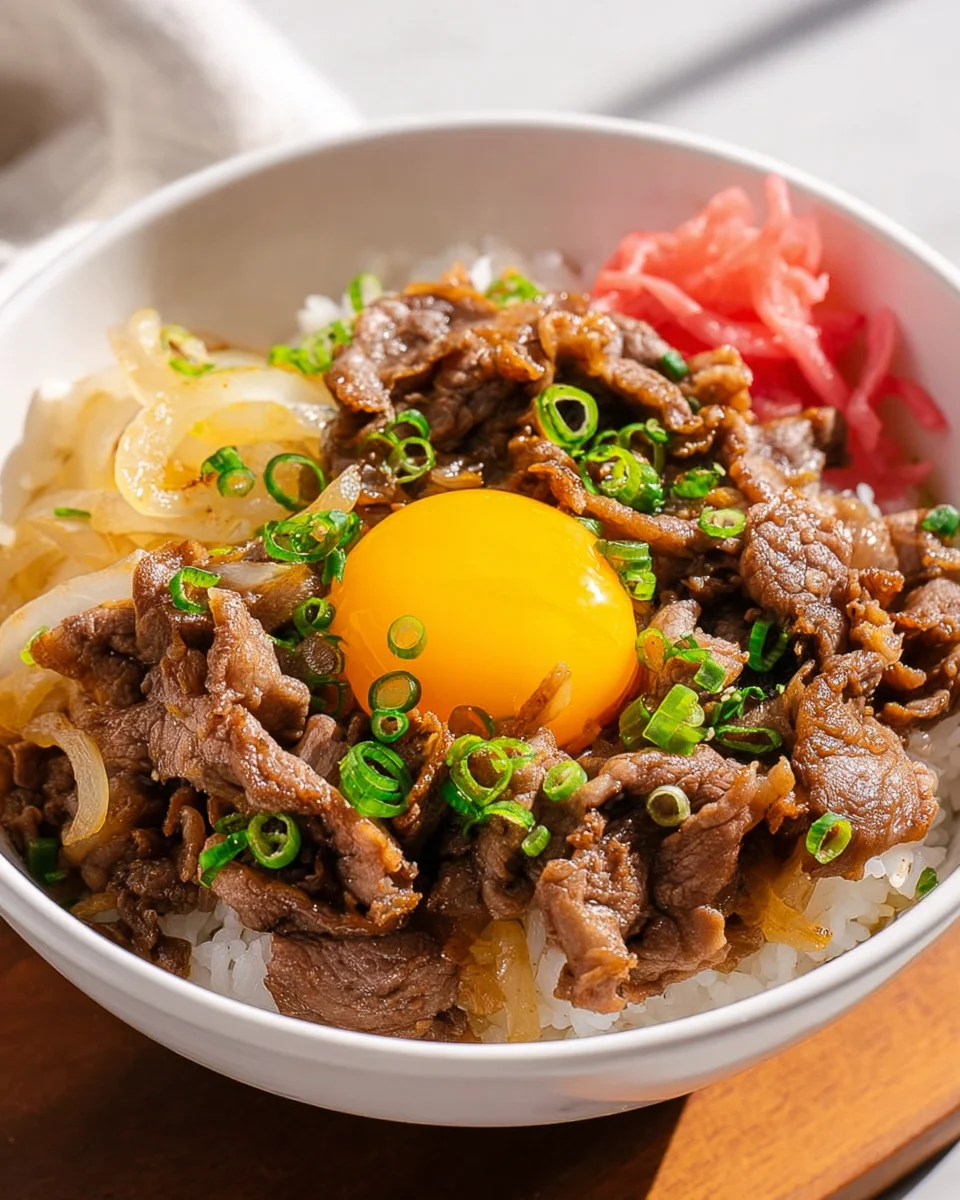
- Beni Shoga: Place a small mound of bright red beni shoga (pickled ginger) on the side of the beef. Its tangy, slightly spicy kick cuts through the richness of the beef beautifully.
- Green Onions: Sprinkle generously with freshly chopped green onions (scallions) for a burst of fresh flavor and vibrant color.
- Shichimi Togarashi: For those who enjoy a little warmth and complexity, a dash of shichimi togarashi (Japanese seven-spice powder) over the top adds a fantastic aromatic zing.
- Raw Egg Yolk (The Ultimate Indulgence): For the most authentic and incredibly rich experience, carefully separate a raw egg yolk from its white and gently nestle it right on top of the hot beef in the center of the bowl. As you begin to eat, break the yolk and stir it into the hot beef and rice. It creates an unbelievably creamy, luscious sauce that coats everything, taking your Gyudon Japanese Beef Bowl to an entirely new level of deliciousness. Ensure you’re using very fresh, safe-to-eat eggs if opting for this.
- Serve Immediately: A Gyudon Japanese Beef Bowl is best enjoyed hot and fresh. Bring it to the table and savor every delicious, comforting bite! This dish is a perfect weeknight meal, delivering incredible flavor with minimal fuss once the prep is done. Enjoy your culinary journey to Japan!
Conclusion:
If there’s one dish I could urge you to try your hand at crafting in your own kitchen, it would undeniably be this incredible recipe. What makes this recipe a true gem, a definite must-try that will forever change your perception of home-cooked Japanese fare? It’s the sheer symphony of flavors and textures, meticulously balanced to create a dish that is both profoundly comforting and exhilaratingly delicious. The thinly sliced beef, tender and infused with that irresistible sweet and savory dashi-based sauce, melts in your mouth with every bite. The onions, translucent and sweet, add a delicate counterpoint to the rich umami of the meat. And all of this is nestled atop a bed of perfectly cooked, fluffy Japanese rice, ready to soak up every last drop of that incredible sauce. This isn’t just a meal; it’s an experience, a culinary hug in a bowl that effortlessly transports you to a bustling Tokyo eatery, right from the comfort of your own dining table.
I genuinely believe that once you’ve tasted the homemade version of this dish, you’ll understand why it’s so revered. It’s the kind of satisfying, deeply flavorful meal that makes a weeknight feel special and brings immense joy to anyone who partakes. There’s a profound sense of accomplishment that comes with preparing such an authentic and delectable meal from scratch, and I promise you, the effort is minimal compared to the incredible reward. This particular rendition of Gyudon Japanese Beef Bowl truly captures the essence of what makes this classic dish so universally beloved: its simplicity, its depth of flavor, and its undeniable capacity to satisfy the soul.
When it comes to serving, the beauty of this dish lies in its versatility and the delightful array of accompaniments that elevate it from great to truly exceptional. For the traditional experience, I highly recommend topping your bowl with a luscious, barely-set onsen tamago (hot spring egg), allowing its creamy yolk to mingle with the savory beef and rice, adding an extra layer of richness. A sprinkle of bright red beni shoga (pickled ginger) provides a zesty, refreshing counterpoint, cutting through the richness beautifully. And for those who appreciate a little warmth and complexity, a dash of shichimi togarashi, the Japanese seven-spice blend, adds a wonderful aromatic kick. Finely chopped green onions also lend a fresh, vibrant touch and a subtle oniony crunch. For a complete meal, consider serving it alongside a simple, comforting bowl of miso soup and a crisp green salad dressed with a light sesame vinaigrette, or perhaps some steamed edamame for a healthy snack.
But don’t stop there! This recipe is also wonderfully adaptable for those who love to experiment. If you’re feeling adventurous, you could try adding some thinly sliced shiitake mushrooms to the simmering sauce for an extra layer of earthy umami. For a healthier spin, swap out the white rice for brown rice, which offers a nuttier flavor and more fiber without compromising the dish’s integrity. Some home cooks even enjoy adding a touch of grated ginger or garlic to the sauce for an even more pungent aroma, though I prefer the traditional subtle profile. You could even explore a vegetarian take by replacing the beef with firm tofu or meaty mushrooms like king oyster mushrooms, adapting the dashi to be kombu-based for a truly plant-forward version. Don’t be afraid to make it your own!
So, now it’s your turn! I sincerely hope this recipe inspires you to dive into the delightful world of Japanese home cooking. Give this fantastic Gyudon Japanese Beef Bowl recipe a try in your kitchen. I promise you, the aroma alone as it simmers will make your mouth water, and the first bite will be pure bliss. It’s a remarkably straightforward recipe that yields impressive results, perfect for both seasoned cooks and culinary newcomers. I’m incredibly excited for you to experience the warmth and satisfaction that comes from creating this delicious dish yourself.
Once you’ve made it, please, please share your experience! I’d absolutely love to hear how it turned out for you. Did you stick to the classic toppings, or did you venture into some of the variations? What was your favorite part of the cooking process, or perhaps, the most rewarding part of eating it? Your stories and insights not only bring me immense joy but also inspire other home cooks in our community. Head over to the comments section and let me know all about your culinary journey with this recipe. Happy cooking, and I can’t wait to hear from you!
Authentic Gyudon Japanese Beef Bowl
Gyudon Japanese Beef Bowl is a culinary hug in a bowl, a symphony of savory flavors. This iconic dish features tender, thinly sliced beef and sweet onions simmered in a delicate dashi-based sauce, served over fluffy white rice for a comforting and satisfying meal.
Ingredients
Instructions
Important Information
Nutrition Facts (Per Serving)
It is important to consider this information as approximate and not to use it as definitive health advice.
Allergy Information
Please check ingredients for potential allergens and consult a health professional if in doubt.


Leave a Comment