

One of my favorite memories is from a summer evening spent at a bustling Korean barbecue joint with my friends. The air was thick with the smoky scent of marinated beef sizzling on the grill, and my heart raced with anticipation as we wrapped the tender, juicy bulgogi in crisp lettuce leaves, adding a generous scoop of spicy kimchi. Each bite was an explosion of flavor — the sweet and savory profile of the beef perfectly balanced by the refreshing crunch of lettuce and the tangy kick from the kimchi. It was pure bliss.
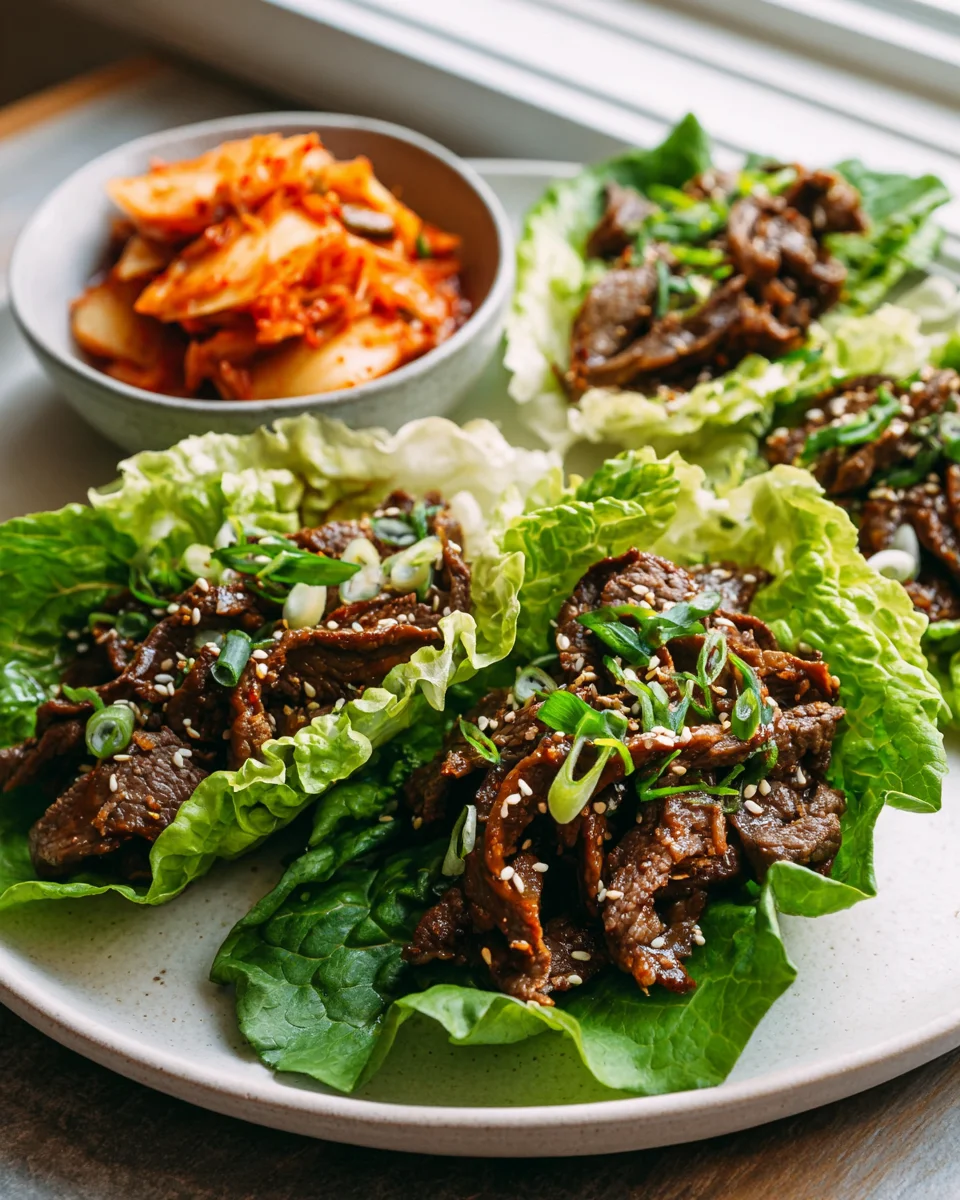
In my kitchen, I’ve made it a tradition to recreate those vibrant flavors with my own twist. My Korean Bulgogi Beef Lettuce Wraps with Kimchi are not just a meal; they’re a celebration of cherished memories and the joy of sharing good food. The beef is marinated in a harmonious blend of soy sauce, sesame oil, and garlic, then grilled to perfection until it caramelizes, filling the kitchen with an irresistible aroma. When you wrap that succulent beef in the coolness of lettuce and top it with homemade kimchi, it’s like a festival of textures and tastes in your mouth.
This dish is special to me because it combines the warmth of family gatherings with the excitement of a meal shared among friends. Plus, it’s customizable — feel free to add your favorite veggies or adjust the spice level to suit your taste. Let me show you exactly how to make it!
Why You’ll Love This Recipe
- Ready in under 30 minutes, making it perfect for busy weeknights or spontaneous gatherings.
- The combination of tender beef marinated in a sweet and spicy sauce creates a flavor explosion that’s both complex and satisfying.
- Fresh, crunchy vegetables add a delightful texture that contrasts beautifully with the savory beef.
- Using lettuce wraps instead of tortillas keeps the dish light and healthy, allowing the flavors to shine through without the heaviness.
- Budget-friendly ingredients ensure you can whip up a gourmet meal without breaking the bank.
Ingredients
- For the Bulgogi Beef:
- 1 pound (450g) beef ribeye or sirloin, thinly sliced against the grain
- 1/4 cup (60ml) soy sauce
- 2 tablespoons (30g) brown sugar
- 1 tablespoon (15ml) sesame oil
- 1 tablespoon (15ml) vegetable oil
- 2 cloves garlic, minced
- 1-inch piece ginger, grated
- 1 tablespoon (15ml) rice vinegar
- 1 tablespoon (15ml) gochujang (Korean red chili paste)
- 1/2 teaspoon black pepper
- 1 small onion, thinly sliced
- 2 green onions, chopped
- 1 tablespoon (15g) sesame seeds (for garnish)
- For the Lettuce Wraps:
- 1 head of butter lettuce or romaine lettuce (about 8-10 large leaves)
- 1 cup (150g) shredded carrots
- 1 cup (150g) cucumber, julienned
- 1 red bell pepper, thinly sliced
- For Serving:
- 1 cup (250g) kimchi (store-bought or homemade)
- Optional: additional gochujang for dipping
Let’s dive into some of the key ingredients that bring this dish to life. First up is the beef. Choosing the right cut is crucial; ribeye or sirloin offers the perfect balance of tenderness and flavor. Ensure it’s sliced against the grain to maximize tenderness. If you can’t find these cuts, flank steak can be a good alternative.
Next, soy sauce serves as the backbone of our marinade, imparting umami and depth. Opt for a low-sodium version if you’re watching your salt intake. The gochujang adds the characteristic heat and sweetness of Korean cuisine, but you can adjust the amount based on your spice tolerance. If you prefer a milder flavor, consider using a teaspoon of red pepper flakes instead.
Step-by-Step Instructions
- In a mixing bowl, combine the soy sauce, brown sugar, sesame oil, vegetable oil, minced garlic, grated ginger, rice vinegar, gochujang, and black pepper. Mix well until the sugar dissolves, about 1-2 minutes. This marinade is key to achieving that signature bulgogi flavor.
- Add the thinly sliced beef to the marinade, ensuring all pieces are coated. Cover and refrigerate for at least 15 minutes, or up to 2 hours for deeper flavor. The longer, the better — just don’t exceed two hours, as the acid can toughen the meat.
- While the beef marinates, prepare the vegetables. Rinse the lettuce leaves and pat them dry. Set aside. Julianne the cucumber and slice the red bell pepper. Shredding the carrots will add crunch and color, enhancing the overall presentation.
- Heat a large skillet or wok over medium-high heat. Once hot, add the marinated beef along with the sliced onion. Cook for 5-7 minutes, stirring frequently. Look for the beef to brown and the onions to become translucent — this means it’s ready!
- Once cooked, remove from heat and sprinkle with chopped green onions and sesame seeds for added flavor and visual appeal. This step takes only a minute but elevates the dish significantly.
- To assemble, take a lettuce leaf, add a spoonful of the bulgogi beef, a handful of shredded carrots, cucumber, and red bell pepper. Top with a spoonful of kimchi for that spicy kick. Wrap it up and enjoy! This final step is where you really personalize your wrap to your taste.
Pro Tips for the Best Korean Bulgogi Beef Lettuce Wraps With Kimchi
- For the most tender beef, ensure your slices are paper-thin — using a sharp knife and partially freezing the meat for about 30 minutes makes this easier.
- A common mistake is overcrowding the pan. Cook the beef in batches if necessary to achieve that perfect sear.
- Invest in a good non-stick skillet or wok. It helps prevent sticking and makes for easy cleanup, allowing you to focus on enjoying your meal.
- If you want to enhance the flavor of your sauce, consider adding a splash of pear juice or grated pear; it brings a natural sweetness that complements the savory elements beautifully.
- Don’t skip the garnishing step! A sprinkle of sesame seeds and green onions adds both texture and aesthetics, making your dish look as good as it tastes.
Variations & Serving Ideas
- For a vegetarian version, substitute beef with marinated tofu or tempeh, which will soak up the marinade flavors beautifully.
- Feel free to switch up the veggies based on what’s in season or your personal preference. Sliced radishes or bell peppers can add an extra crunch.
- For a spicy twist, add sliced jalapeños or a drizzle of sriracha to your wraps for an extra kick.
- Pair your bulgogi beef wraps with a side of rice or quinoa for a more substantial meal; both absorb the delicious juices.
To complement your wraps, serve with a side of miso soup for warmth, or a light cucumber salad for a refreshing contrast. A glass of chilled soju or a non-alcoholic sparkling drink can elevate the dining experience, balancing the savory flavors.
Storage, Make-Ahead & Reheating
These Korean Bulgogi Beef Lettuce Wraps can be stored in the fridge for up to 3 days. To store, keep the beef and veggies in separate airtight containers to maintain freshness. While the dish is best enjoyed fresh, the flavors actually deepen after a day in the fridge!
If you want to freeze the beef, do so before cooking. Place the marinated beef in a freezer bag, removing as much air as possible, and it will last for up to 3 months. For reheating, thaw in the fridge overnight, then sauté in a skillet over medium heat for about 5-7 minutes until heated through. Avoid microwaving, as it can make the beef tough.
Frequently Asked Questions
Can I make Korean Bulgogi Beef Lettuce Wraps With Kimchi ahead of time?
Yes — in fact, it tastes even better the next day! The flavors have more time to meld together. Just assemble the wraps fresh before serving to maintain the crispness of the lettuce.
What type of beef is best for bulgogi?
The best cuts for bulgogi are ribeye or sirloin, as they are tender and flavorful. If these aren’t available, flank steak or even brisket can work, but they may require slightly longer marination or cooking times.
What can I use instead of gochujang?
If you don’t have gochujang, you can substitute it with a mix of miso paste and a little hot sauce or chili flakes. While it won’t have the same depth of flavor, it will still provide some heat and umami.
Can I add more vegetables to the wraps?
Absolutely! Feel free to add any of your favorite vegetables, such as sliced bell peppers, radishes, or even avocado for creaminess. The more colorful, the better!
How do I keep the lettuce fresh for wraps?
To keep the lettuce fresh, store it unwashed in a produce bag in the fridge. Wash it just before using, and you can even wrap it in a damp paper towel to maintain moisture and crunch.
Final Thoughts
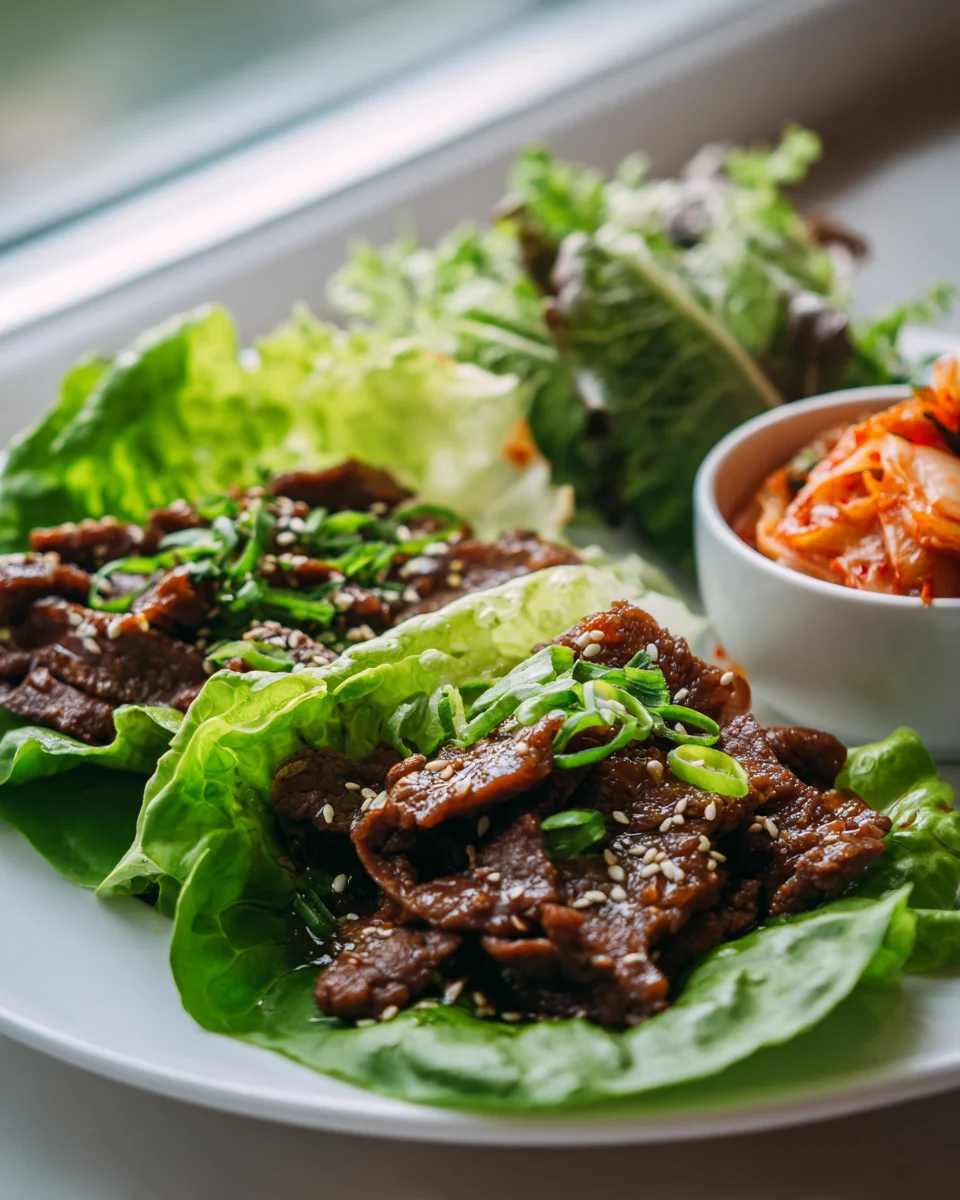
Korean Bulgogi Beef Lettuce Wraps With Kimchi is a fantastic recipe that beautifully balances the rich, savory flavors of marinated beef with the fresh crunch of lettuce and the tangy kick of kimchi. Each bite is a delightful explosion of taste, making it not only satisfying but also a feast for the senses.
This is the kind of recipe I come back to again and again, especially when I’m craving something vibrant and healthy that feels like a special treat. The combination of textures and flavors is simply irresistible! I encourage you to give this dish a try and experience the joy it brings to your table. Don’t forget to share your results or add your own twist to the wraps—I’d love to hear how you make it your own!
Savory Bulgogi Beef Lettuce Wraps
- Total Time: 25 minutes
- Yield: 4 servings 1x
Description
These Korean Bulgogi Beef Lettuce Wraps are a delightful combination of marinated beef and fresh vegetables wrapped in crisp lettuce. Enjoy a burst of flavors with each bite, enhanced by the spicy kick of kimchi.
Ingredients
- For the Bulgogi Beef:
- 1 pound (450g) beef ribeye or sirloin, thinly sliced against the grain
- 1/4 cup (60ml) soy sauce
- 2 tablespoons (30g) brown sugar
- 1 tablespoon (15ml) sesame oil
- 1 tablespoon (15ml) vegetable oil
- 2 cloves garlic, minced
- 1-inch piece ginger, grated
- 1 tablespoon (15ml) rice vinegar
- 1 tablespoon (15ml) gochujang (Korean red chili paste)
- 1/2 teaspoon black pepper
- 1 small onion, thinly sliced
- 2 green onions, chopped
- 1 tablespoon (15g) sesame seeds (for garnish)
- For the Lettuce Wraps:
- 1 head of butter lettuce or romaine lettuce (about 8–10 large leaves)
- 1 cup (150g) shredded carrots
- 1 cup (150g) cucumber, julienned
- 1 red bell pepper, thinly sliced
- For Serving:
- 1 cup (250g) kimchi (store-bought or homemade)
- Optional: additional gochujang for dipping
Instructions
- In a mixing bowl, combine the soy sauce, brown sugar, sesame oil, vegetable oil, minced garlic, grated ginger, rice vinegar, gochujang, and black pepper. Mix well until the sugar dissolves, about 1-2 minutes. This marinade is key to achieving that signature bulgogi flavor.
- Add the thinly sliced beef to the marinade, ensuring all pieces are coated. Cover and refrigerate for at least 15 minutes, or up to 2 hours for deeper flavor. The longer, the better — just don’t exceed two hours, as the acid can toughen the meat.
- While the beef marinates, prepare the vegetables. Rinse the lettuce leaves and pat them dry. Set aside. Julianne the cucumber and slice the red bell pepper. Shredding the carrots will add crunch and color, enhancing the overall presentation.
- Heat a large skillet or wok over medium-high heat. Once hot, add the marinated beef along with the sliced onion. Cook for 5-7 minutes, stirring frequently. Look for the beef to brown and the onions to become translucent — this means it's ready!
- Once cooked, remove from heat and sprinkle with chopped green onions and sesame seeds for added flavor and visual appeal. This step takes only a minute but elevates the dish significantly.
- To assemble, take a lettuce leaf, add a spoonful of the bulgogi beef, a handful of shredded carrots, cucumber, and red bell pepper. Top with a spoonful of kimchi for that spicy kick. Wrap it up and enjoy! This final step is where you really personalize your wrap to your taste.
- Prep Time: 15 mins
- Cook Time: 10 mins
- Category: Main Course
- Method: Grilling
- Cuisine: Korean
Nutrition
- Serving Size: 1 wrap
- Calories: 350
- Sugar: 8 g
- Sodium: 900 mg
- Fat: 20 g
- Saturated Fat: 5 g
- Unsaturated Fat: 15 g
- Trans Fat: 0 g
- Carbohydrates: 20 g
- Fiber: 3 g
- Protein: 25 g
- Cholesterol: 70 mg
Keywords: For the most tender beef, ensure your slices are paper-thin — using a sharp knife and partially freezing the meat for about 30 minutes makes this easier. A common mistake is overcrowding the pan. Cook the beef in batches if necessary to achieve that perfect sear.



Leave a Comment