
Korean Gochujang Chicken Bowl With Pickled Veggies
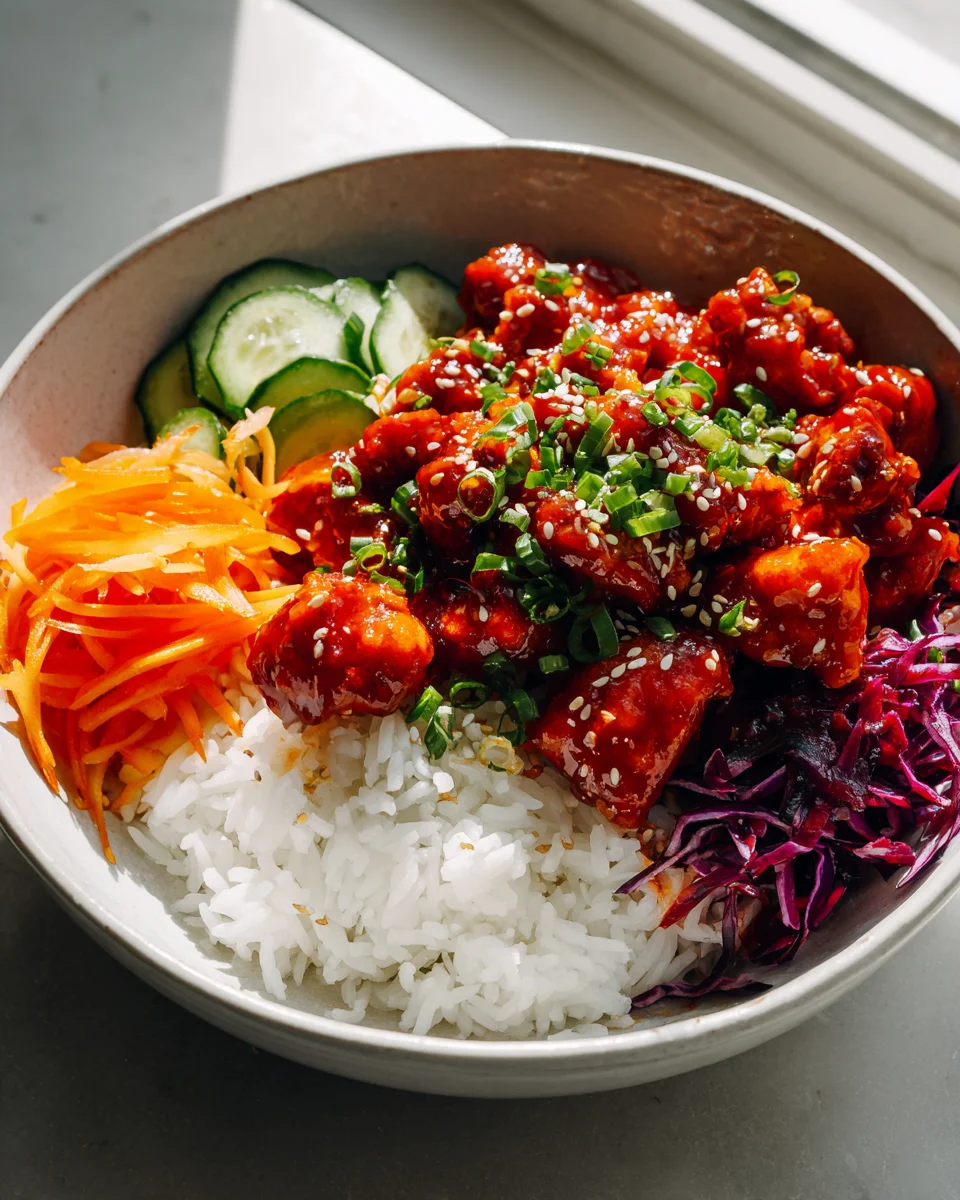
Okay, friends, let me tell you about the Korean Gochujang Chicken Bowl With Pickled Veggies – it’s an absolute game-changer for your weeknight dinner rotation! I seriously can’t get enough of this dish, and I just know you’re going to fall head over heels for it too. What makes this particular recipe so special is the incredible balance it strikes: you get tender, succulent pieces of chicken coated in a rich, sticky, and wonderfully spicy-sweet gochujang sauce, perfectly complemented by the bright, zesty crunch of homemade quick-pickled vegetables. Imagine that perfectly caramelized chicken, served warm over a fluffy bed of rice, with the tangy pickles cutting through all that rich flavor, creating a symphony of tastes and textures in every single bite! You’ll love how satisfying yet incredibly fresh this bowl feels, making it an exciting and comforting meal all at once. Plus, it comes together quicker than you might think, proving that vibrant, authentic Korean-inspired flavors are totally achievable right in your home kitchen. Get ready for your new favorite go-to!

Ingredient Notes
Creating this delicious Korean Gochujang Chicken Bowl With Pickled Veggies is all about balancing those incredible sweet, spicy, sour, and savory flavors. Here are the key ingredients and some helpful notes on substitutions:
- Chicken: For the most tender and flavorful result, I always reach for boneless, skinless chicken thighs. They stay wonderfully juicy even when cooked at higher heat. If you prefer, boneless, skinless chicken breasts can also be used; just be mindful not to overcook them to prevent dryness.
- Gochujang (Korean Chili Paste): This is the star of our dish! Gochujang provides that signature deep, fermented chili flavor, along with a touch of sweetness and umami. You can find it in various spice levels – choose one that suits your palate. It’s truly irreplaceable for the authentic taste, so I don’t recommend a direct substitution.
- Gochugaru (Korean Chili Flakes): For an extra kick and beautiful red color, I love adding a bit of gochugaru. It has a fruitier, less intense heat than other chili flakes. You can adjust the amount to your spice preference or omit it if you prefer a milder dish.
- Soy Sauce: This provides essential umami and saltiness to our marinade. I usually opt for a low-sodium variety to better control the seasoning.
- Sesame Oil (Toasted): A drizzle of toasted sesame oil adds a nutty, aromatic depth that is characteristic of Korean cuisine. Make sure it’s toasted for that rich flavor.
- Garlic and Ginger: Freshly minced garlic and grated ginger are non-negotiable for their vibrant aromatics that elevate the entire dish.
- Sweetener: To balance the heat of the gochujang, a touch of sweetness is crucial. My go-to is honey, but maple syrup or brown sugar work equally well.
- Rice Vinegar: You’ll use this in both the chicken marinade and for our quick pickled veggies. It provides a bright, tangy acidity. If a recipe component traditionally includes Mirin (rice wine), a great non-alcohol substitute for depth and sweetness is adding a bit more rice vinegar along with a pinch of sugar, or even a small amount of chicken or beef broth.
- Pickling Vegetables: My favorite combination for the quick pickles includes thinly sliced cucumbers, matchstick carrots, and daikon radish. Their crisp texture and mild flavors complement the rich chicken perfectly. Feel free to experiment with other crisp vegetables like red bell peppers or thinly sliced red onion.
- Rice: A foundation of freshly steamed rice (jasmine or short-grain white rice are my favorites) is essential for soaking up all those delicious sauces. Brown rice is a great healthier alternative.
- Garnishes: Toasted sesame seeds and sliced green onions add a lovely finish, both visually and texturally.
Substitutions to Keep in Mind:
- Protein: While chicken is fantastic here, if you’re looking for a change, thinly sliced beef sirloin or flank steak is an excellent alternative. Tofu or sturdy mushrooms like shiitake could also be used for a vegetarian option.
- Sweetener: As mentioned, honey can be swapped for maple syrup or brown sugar.
Step-by-Step Instructions
Let’s get cooking! This dish might look like it has a few components, but I promise it comes together beautifully. We’ll start with the pickles, then move to our flavorful gochujang chicken.
Step 1: Prepare Your Quick Pickled Veggies (The Day Before or At Least 1 Hour Ahead)
- First, let’s get those veggies ready. Thinly slice your cucumber into rounds, and julienne your carrots and daikon radish into matchsticks. If you have a mandoline, it can make this super quick and even.
- Next, prepare your pickling liquid. In a small saucepan, combine 1 cup water, 1/2 cup rice vinegar, 2 tablespoons granulated sugar, and 1 teaspoon salt. Heat over medium heat, stirring occasionally, until the sugar and salt are fully dissolved. Don’t bring it to a rolling boil, just warm enough to dissolve everything.
- Place your prepared vegetables in a heat-proof jar or bowl. Pour the warm pickling liquid over the veggies, ensuring they are fully submerged.
- Let the vegetables cool to room temperature, then cover and refrigerate for at least 1 hour, or ideally several hours (even overnight!) to let the flavors develop. The longer they sit, the more pickled they become.
Step 2: Marinate the Gochujang Chicken (At Least 30 Minutes)
- Pat your boneless, skinless chicken thighs (or breast) dry with paper towels and cut them into bite-sized pieces, about 1-inch cubes.
- In a medium bowl, combine all the marinade ingredients: 1/4 cup gochujang, 1 tablespoon gochugaru (optional, for extra heat), 2 tablespoons soy sauce, 1 tablespoon toasted sesame oil, 1 tablespoon honey (or other sweetener), 1 tablespoon rice vinegar (or your non-alcohol alternative if using), 3 cloves garlic (minced), and 1 teaspoon fresh ginger (grated). Mix everything thoroughly until you have a smooth paste.
- Add the chicken pieces to the marinade, tossing to ensure every piece is evenly coated.
- Cover the bowl and refrigerate for at least 30 minutes. If you have the time, marinating for 2-4 hours, or even overnight, will yield the most flavorful and tender chicken.
Step 3: Cook the Gochujang Chicken
- Once your chicken is marinated, heat 1-2 tablespoons of neutral oil (like vegetable or canola oil) in a large skillet or wok over medium-high heat.
- Once the oil is shimmering, add the marinated chicken in a single layer. Try not to overcrowd the pan; you might need to cook the chicken in two batches to ensure it browns nicely and cooks evenly. Overcrowding can steam the chicken instead of searing it.
- Cook for 5-7 minutes, flipping occasionally, until the chicken is cooked through, beautifully caramelized, and has a slightly sticky glaze from the gochujang. The internal temperature should reach 165°F (74°C).
- Once cooked, remove the chicken from the pan and set aside.
Step 4: Assemble Your Korean Gochujang Chicken Bowls
- While the chicken is cooking, make sure your rice is freshly steamed and ready.
- To assemble, spoon a generous portion of warm rice into each serving bowl.
- Arrange the cooked gochujang chicken over the rice.
- Drain your quick pickled veggies and place a healthy serving alongside the chicken.
- Finish each bowl with a sprinkle of toasted sesame seeds and fresh sliced green onions. For an extra touch, I sometimes add a dollop of extra gochujang on the side or a sprinkle of extra gochugaru!
- Serve immediately and enjoy your delicious, flavorful bowl!
Tips & Suggestions
I’ve made this Korean Gochujang Chicken Bowl countless times, and here are a few of my favorite tips to make yours extra special:
- Marinate for Maximum Flavor: While 30 minutes is the minimum, truly give your chicken a good soak in that gochujang marinade. An hour is better, and if you can plan ahead, an overnight marinade (up to 12 hours) will result in incredibly tender and deeply flavored chicken.
- Don’t Overcrowd the Pan: This is a golden rule for stir-fries and searing meat. If you put too much chicken in the pan at once, the temperature will drop, and the chicken will steam instead of getting that lovely caramelized crust. Cook in batches if necessary, and resist the urge to stir constantly.
- Adjust the Heat: Gochujang comes in different spice levels, and gochugaru adds even more kick. Taste your marinade before adding the chicken and adjust the amount of gochugaru to your preference. You can always add more heat later with a dash of chili oil, but it’s harder to remove it!
- Make Pickles Ahead: The quick pickled veggies are fantastic when made a day or two in advance. This allows the flavors to fully meld and saves you time on the day you’re serving the bowl. They’ll keep well in the fridge for several days.
- Crispy Edges are Key: When cooking the chicken, aim for those slightly charred, caramelized edges. That’s where a lot of the delicious, complex flavor lives!
- Garnish Generously: Don’t skip the garnishes! Sliced green onions and toasted sesame seeds not only make the bowl look appealing but also add freshness and texture that truly complete the dish.
- Explore Additions: Want to bulk up your bowl? A fried or soft-boiled egg is a fantastic addition, with its runny yolk adding an extra layer of richness. Some fresh kimchi on the side would also be a perfect accompaniment.
Storage
If you’re lucky enough to have leftovers of this Korean Gochujang Chicken Bowl (which rarely happens in my house!), here’s how I recommend storing them to keep them tasting great:
- Cooked Gochujang Chicken: Store any leftover cooked chicken in an airtight container in the refrigerator for up to 3-4 days. It reheats wonderfully.
- Pickled Veggies: The quick pickled vegetables will stay crisp and delicious in their pickling liquid, stored in an airtight container in the refrigerator, for up to a week.
- Assembled Bowls: While this dish is best enjoyed fresh, if you have an assembled bowl leftover, you can store it in an airtight container in the refrigerator for 1-2 days. The rice might become a bit firmer, but the flavors will still be great.
- Reheating: For the chicken and rice, I recommend reheating in the microwave until warmed through. If the chicken seems a little dry, you can add a tiny splash of water or broth before reheating. The pickled veggies are best served cold or at room temperature.
Final Thoughts
And there you have it! I truly believe that the Korean Gochujang Chicken Bowl With Pickled Veggies is more than just a recipe; it’s an experience waiting to happen in your kitchen. From the moment that vibrant, spicy-sweet gochujang chicken hits your palate, perfectly complemented by the bright, tangy crunch of the pickled vegetables, you’ll understand why I’m so excited about this dish. It’s a symphony of flavors and textures, where the savory depth of the chicken meets the refreshing zest of the veggies, all served beautifully over fluffy rice.
This bowl isn’t just delicious; it’s incredibly satisfying, making it an ideal choice for a weeknight dinner that feels anything but ordinary. It brings the excitement of Korean flavors right to your table, offering a complete and utterly delightful meal in one go. I hope you enjoy every single bite of your Korean Gochujang Chicken Bowl With Pickled Veggies as much as I do. Get ready for a new favorite!
Spicy Korean Gochujang Chicken Bowl with Tangy Pickled Veggies
- Total Time: 45 minutes
- Yield: 4 servings 1x
Description
This Korean Gochujang Chicken Bowl with Pickled Veggies is a vibrant and satisfying weeknight dinner that combines tender chicken in a spicy-sweet sauce with crunchy pickled vegetables. Experience a delightful balance of flavors and textures that will make this dish a new favorite!
Ingredients
- 1 lb boneless, skinless chicken thighs (or breasts)
- 1/4 cup gochujang (Korean chili paste)
- 1 tablespoon gochugaru (Korean chili flakes, optional)
- 2 tablespoons soy sauce
- 1 tablespoon toasted sesame oil
- 1 tablespoon honey (or other sweetener)
- 1 tablespoon rice vinegar
- 3 cloves garlic (minced)
- 1 teaspoon fresh ginger (grated)
- 1 cup water (for pickling liquid)
- 1/2 cup rice vinegar (for pickling liquid)
- 2 tablespoons granulated sugar (for pickling liquid)
- 1 teaspoon salt (for pickling liquid)
- Thinly sliced cucumbers (for pickling)
- Matchstick carrots (for pickling)
- Daikon radish (for pickling)
- Freshly steamed rice (jasmine or short-grain white rice)
- Toasted sesame seeds (for garnish)
- Sliced green onions (for garnish)
Instructions
- Prepare your quick pickled veggies: Thinly slice your cucumber into rounds, and julienne your carrots and daikon radish into matchsticks.
- In a small saucepan, combine 1 cup water, 1/2 cup rice vinegar, 2 tablespoons granulated sugar, and 1 teaspoon salt. Heat over medium heat until the sugar and salt are fully dissolved.
- Place your prepared vegetables in a heat-proof jar or bowl. Pour the warm pickling liquid over the veggies, ensuring they are fully submerged.
- Let the vegetables cool to room temperature, then cover and refrigerate for at least 1 hour, or ideally several hours (even overnight).
- Pat your boneless, skinless chicken thighs (or breast) dry with paper towels and cut them into bite-sized pieces, about 1-inch cubes.
- In a medium bowl, combine all the marinade ingredients: 1/4 cup gochujang, 1 tablespoon gochugaru (optional), 2 tablespoons soy sauce, 1 tablespoon toasted sesame oil, 1 tablespoon honey, 1 tablespoon rice vinegar, 3 cloves garlic (minced), and 1 teaspoon fresh ginger (grated). Mix thoroughly until you have a smooth paste.
- Add the chicken pieces to the marinade, tossing to ensure every piece is evenly coated.
- Cover the bowl and refrigerate for at least 30 minutes.
- Heat 1-2 tablespoons of neutral oil in a large skillet or wok over medium-high heat.
- Once the oil is shimmering, add the marinated chicken in a single layer, cooking in batches if necessary.
- Cook for 5-7 minutes, flipping occasionally, until the chicken is cooked through and beautifully caramelized.
- Remove the chicken from the pan and set aside.
- While the chicken is cooking, make sure your rice is freshly steamed and ready.
- To assemble, spoon a generous portion of warm rice into each serving bowl.
- Arrange the cooked gochujang chicken over the rice.
- Drain your quick pickled veggies and place a healthy serving alongside the chicken.
- Finish each bowl with a sprinkle of toasted sesame seeds and fresh sliced green onions. Serve immediately.
- Prep Time: 15 mins
- Cook Time: 30 mins
- Category: Dinner
- Method: Stir-frying
- Cuisine: Korean
Nutrition
- Serving Size: 1 bowl
- Calories: 500
- Sugar: 10 g
- Sodium: 800 mg
- Fat: 20 g
- Saturated Fat: 3 g
- Unsaturated Fat: 15 g
- Trans Fat: 0 g
- Carbohydrates: 60 g
- Fiber: 3 g
- Protein: 30 g
- Cholesterol: 100 mg
Keywords: Marinate the chicken for maximum flavor, ideally for 2-4 hours or overnight. Don't overcrowd the pan while cooking to ensure proper searing. Adjust the heat level by tasting the marinade before adding the chicken.
Leave a Comment