
Vanilla French Beignets Recipe
Oh, my goodness, prepare yourselves for a truly delightful experience! The Vanilla French Beignets Recipe is not just any fried dough; it’s a little slice of heaven that will transport your taste buds straight to a charming Parisian cafe or a bustling New Orleans brunch. What makes these beignets so incredibly special, you ask? It’s that perfect combination of an unbelievably light, airy, and pillowy texture, almost like biting into a sweet cloud, elevated by the delicate warmth of vanilla. I promise you, readers will absolutely adore these because they’re the ultimate comfort food, utterly irresistible, and surprisingly fun to make right in your own kitchen.
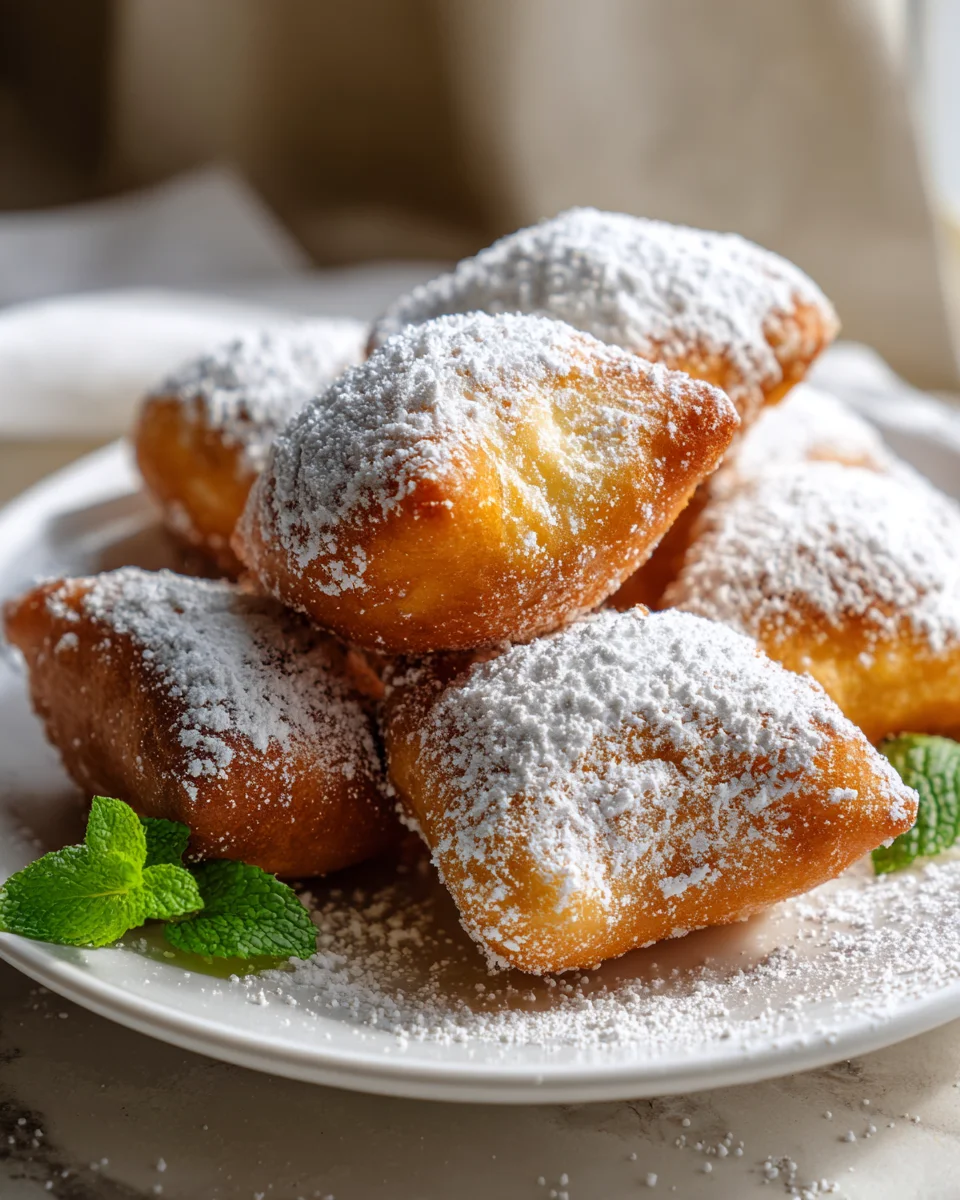
In a nutshell, French beignets are classic square-shaped doughnuts, deep-fried to golden perfection and then generously dusted with a mountain of powdered sugar. Our version, with its rich vanilla essence woven throughout, takes this iconic pastry to a whole new level of deliciousness. Get ready for some serious joy!

Ingredient Notes
Crafting perfect Vanilla French Beignets starts with understanding a few key ingredients. While the recipe itself is quite simple, the quality and preparation of your components truly elevate the final product. Here’s what you need to know about the stars of our show:
- All-Purpose Flour: This is the backbone of our beignets, providing structure. I find a good quality unbleached all-purpose flour works beautifully for a tender crumb. If you’re feeling adventurous and want a slightly chewier beignet, you could try substituting about 1/4 of the all-purpose flour with bread flour, but it’s not strictly necessary. For gluten-free alternatives, a 1:1 gluten-free baking blend designed for yeast baking might work, but be prepared for a slightly different texture and possibly a need for more liquid as GF flours absorb differently.
- Active Dry Yeast: This is what gives our beignets their signature airy lightness. Make sure your yeast is fresh and active! I always proof my yeast in warm milk with a pinch of sugar first to ensure it’s alive and kicking. Instant yeast can also be used; you can typically mix it directly with the dry ingredients without proofing, but I still prefer to proof it just to be safe.
- Granulated Sugar: We’re not looking for overly sweet dough, but the sugar here plays a crucial role in feeding the yeast and tenderizing the dough. It also contributes to that beautiful golden-brown crust when fried.
- Warm Whole Milk: The liquid base for our dough, whole milk adds richness and softness. Ensure it’s warm (around 105-115°F or 40-46°C), as this is the ideal temperature for activating the yeast. If you need a dairy-free option, unsweetened almond milk or oat milk can be used, though they might yield a slightly less rich dough.
- Large Eggs: Eggs contribute to the richness, color, and structure of the beignets. Make sure they are at room temperature; this helps them incorporate better into the dough and create a smoother mixture.
- Unsalted Butter: Melted butter adds a wonderful richness and tenderness to the dough. Using unsalted butter allows us to control the overall salt content in the recipe. If you only have salted butter, reduce the added salt in the recipe by about half a teaspoon. For a dairy-free alternative, a good quality plant-based butter substitute can work well.
- Vanilla Extract (or Vanilla Bean Paste): This is where the “Vanilla” in our Vanilla French Beignets truly shines! Do not skimp on quality here. I highly recommend using a pure vanilla extract or, even better, vanilla bean paste for those beautiful flecks and intense flavor. The amount might seem generous, but it’s what truly sets these beignets apart and infuses them with that unmistakable aroma.
- Salt: A small amount of salt is essential to balance the sweetness and enhance the overall flavor of the beignets. It also helps to control yeast activity.
- Vegetable Oil (for frying): A neutral-flavored oil with a high smoke point is crucial for frying. Canola, sunflower, or peanut oil are all excellent choices.
- Powdered Sugar: The quintessential finishing touch for beignets! A generous dusting after frying adds both sweetness and a classic aesthetic.
Step-by-Step Instructions
Making Vanilla French Beignets is a delightful process, and I’m excited to guide you through each step to ensure your success. Patience is a virtue, especially when it comes to yeast doughs, but the reward of warm, fluffy, vanilla-scented pastries is absolutely worth it!
- Activate the Yeast: In a large mixing bowl or the bowl of your stand mixer, combine the warm milk (ensure it’s between 105-115°F or 40-46°C) with a tablespoon of the granulated sugar and sprinkle the active dry yeast over the top. Stir gently, then let it sit for 5-10 minutes. You should see a foamy layer form on the surface, indicating your yeast is active and ready to go. If it doesn’t foam, your yeast might be old, or your milk might have been too hot or too cold – it’s best to start again with fresh yeast.
- Combine Wet Ingredients: To the activated yeast mixture, add the remaining granulated sugar, the room temperature eggs, melted unsalted butter, and the star of our show, the vanilla extract (or vanilla bean paste). Whisk everything together until well combined. The mixture should be smooth and fragrant.
- Add Dry Ingredients: Gradually add the all-purpose flour and salt to the wet ingredients. If using a stand mixer, attach the dough hook and mix on low speed until a shaggy dough forms. If mixing by hand, use a sturdy spoon or spatula.
- Knead the Dough: Increase the stand mixer speed to medium-low and knead for 8-10 minutes. If kneading by hand, turn the dough out onto a lightly floured surface and knead vigorously for 10-15 minutes. You’re looking for a smooth, elastic dough that springs back when gently poked. It might be a bit sticky initially, but resist adding too much extra flour.
- First Rise (Proofing): Lightly grease a clean large bowl with a little vegetable oil. Place the dough in the bowl, turning it once to coat the top. Cover the bowl tightly with plastic wrap or a clean kitchen towel. Let the dough rise in a warm, draft-free place for 1.5 to 2 hours, or until it has doubled in size. This is a crucial step for the beignets’ texture!
- Punch Down and Chill: Once the dough has doubled, gently punch it down to release the air. I find that chilling the dough for at least 30 minutes (or up to overnight) in the refrigerator makes it much easier to handle and roll out cleanly. Simply re-cover the bowl with plastic wrap and place it in the fridge.
- Roll and Cut: On a lightly floured surface, roll out the chilled dough to about 1/4 to 1/2 inch thick (I prefer closer to 1/4 inch for lighter, crispier beignets). Using a sharp knife or a pizza cutter, cut the dough into 2-inch squares or rectangles. You can re-roll the scraps once or twice, but be gentle.
- Second Rise (Optional but Recommended): Arrange the cut beignet squares on a lightly floured baking sheet, leaving a little space between them. Loosely cover them with plastic wrap or a kitchen towel and let them rise for another 15-30 minutes. This short second proof will give them an extra boost of lightness when fried.
- Heat the Oil: Pour about 2-3 inches of vegetable oil into a large, heavy-bottomed pot or Dutch oven. Heat the oil over medium-high heat until it reaches 350-360°F (175-180°C). A deep-fry thermometer is your best friend here! Maintaining the correct oil temperature is paramount for perfect beignets – too cool and they’ll be greasy, too hot and they’ll brown too quickly on the outside and be raw inside.
- Fry the Beignets: Carefully place 3-4 beignets into the hot oil at a time, being careful not to overcrowd the pot. Fry for 1-2 minutes per side, or until they are puffed, golden brown, and cooked through. Use a slotted spoon or spider to flip them.
- Drain and Dust: Once golden, remove the beignets from the oil and transfer them to a wire rack set over a baking sheet lined with paper towels to drain excess oil. While they are still warm, liberally dust them with powdered sugar using a fine-mesh sieve.
- Serve Immediately: Beignets are absolutely best served fresh and warm, straight from the fryer!
Tips & Suggestions
Having made my fair share of beignets, I’ve picked up a few tricks that I’d love to share with you. These tips will help ensure your Vanilla French Beignets turn out fluffy, fragrant, and perfectly delicious every time:
- Oil Temperature is Key: I cannot stress this enough – a consistent oil temperature of 350-360°F (175-180°C) is the secret to non-greasy, perfectly cooked beignets. Invest in a good deep-fry thermometer. If the oil gets too hot, reduce the heat. If it dips too low, give it a moment to recover before adding more beignets.
- Don’t Overcrowd the Pot: Frying too many beignets at once will drastically drop the oil temperature, leading to greasy, dense pastries. Work in small batches (3-4 at a time, depending on your pot size) to maintain a steady temperature and give them space to puff up.
- High-Quality Vanilla: Since “Vanilla” is in the name, make it count! Use the best pure vanilla extract or vanilla bean paste you can get your hands on. The difference in aroma and flavor is truly noticeable and worth the extra cost.
- Patience with Proofing: Yeast doughs need time to rise. Don’t rush the proofing process. A warm, draft-free spot is ideal. If your kitchen is cool, you can lightly warm your oven to its lowest setting (then turn it off!) and let the dough rise in there.
- Chill the Dough: While optional, I highly recommend chilling the dough for at least 30 minutes after the first rise. It makes the dough much easier to handle, roll out, and cut cleanly without sticking, resulting in more uniform beignets.
- Generous Dusting of Powdered Sugar: Beignets are traditionally served absolutely smothered in powdered sugar. Don’t be shy! Dust them while they are still warm so the sugar adheres nicely. A fine-mesh sieve helps achieve an even, elegant coating.
- Serve Immediately: These delightful pastries are truly at their best moments after coming out of the fryer. The crisp exterior, soft interior, and warm vanilla aroma are incomparable when fresh.
- Clean Oil: If frying multiple batches, occasionally skim out any stray crumbs from the oil to prevent them from burning and imparting an off-flavor to subsequent beignets.
Storage
Vanilla French Beignets are, without a doubt, a treat best enjoyed fresh and warm. Their light, airy texture and delicate crispness are fleeting. However, if you happen to have any leftovers, here’s my advice for storage:
- Immediate Consumption is Best: I always tell friends that beignets have a very short shelf life for peak enjoyment – ideally, within an hour or two of frying. After that, they tend to lose their crispness and become a bit chewier.
- Short-Term Storage: If you must store them, allow the beignets to cool completely (without powdered sugar, if possible) before placing them in an airtight container at room temperature. They will keep for about 1 day, though their quality will diminish.
- Reheating: To attempt to revive leftover beignets, you can gently warm them in a preheated oven at 300°F (150°C) for 5-7 minutes. This might help crisp them up slightly. Reheat only the amount you plan to eat. After reheating, a fresh dusting of powdered sugar is absolutely essential.
- Freezing: I generally don’t recommend freezing already fried beignets, as they lose a lot of their desirable texture upon thawing and reheating. The best approach for making ahead is to freeze the dough! You can freeze the shaped, uncooked beignet squares on a baking sheet until solid, then transfer them to a freezer bag. When ready to use, thaw them in the refrigerator, let them come to room temperature and proof slightly, then fry as directed.
Final Thoughts
And there you have it! I hope you’re as excited as I am to try this delightful Vanilla French Beignets Recipe. There’s truly nothing quite like the experience of biting into one of these warm, sugar-dusted clouds. This recipe ensures a perfect balance of vanilla aroma and that signature light, airy texture that makes French beignets so utterly irresistible.
It’s a wonderful journey from simple ingredients to a truly extraordinary treat, perfect for breakfast, dessert, or a special weekend brunch. I promise, once you taste your homemade creations from this Vanilla French Beignets Recipe, you’ll understand why it’s a staple in our home. Go on, give it a try – you deserve this sweet moment of joy!
Irresistible Vanilla French Beignets for Your Sweet Craving
- Total Time: 1 hour
- Yield: 12 servings 1x
Description
Indulge in these delightful Vanilla French Beignets that offer a light, airy texture and a rich vanilla flavor. Perfect for breakfast or dessert, these beignets will transport you to a charming cafe with every bite.
Ingredients
- 3 1/4 cups All-Purpose Flour
- 2 1/4 teaspoons Active Dry Yeast
- 1/4 cup Granulated Sugar
- 1 cup Warm Whole Milk
- 2 Large Eggs
- 1/4 cup Unsalted Butter, melted
- 2 teaspoons Vanilla Extract (or Vanilla Bean Paste)
- 1/2 teaspoon Salt
- Vegetable Oil (for frying)
- Powdered Sugar (for dusting)
Instructions
- In a large mixing bowl or the bowl of your stand mixer, combine the warm milk (ensure it's between 105-115°F or 40-46°C) with a tablespoon of the granulated sugar and sprinkle the active dry yeast over the top. Stir gently, then let it sit for 5-10 minutes.
- To the activated yeast mixture, add the remaining granulated sugar, the room temperature eggs, melted unsalted butter, and the vanilla extract (or vanilla bean paste). Whisk everything together until well combined.
- Gradually add the all-purpose flour and salt to the wet ingredients. If using a stand mixer, attach the dough hook and mix on low speed until a shaggy dough forms.
- Increase the stand mixer speed to medium-low and knead for 8-10 minutes. If kneading by hand, turn the dough out onto a lightly floured surface and knead vigorously for 10-15 minutes.
- Lightly grease a clean large bowl with a little vegetable oil. Place the dough in the bowl, turning it once to coat the top. Cover the bowl tightly with plastic wrap or a clean kitchen towel. Let the dough rise in a warm, draft-free place for 1.5 to 2 hours, or until it has doubled in size.
- Once the dough has doubled, gently punch it down to release the air. Chill the dough for at least 30 minutes (or up to overnight) in the refrigerator.
- On a lightly floured surface, roll out the chilled dough to about 1/4 to 1/2 inch thick. Using a sharp knife or a pizza cutter, cut the dough into 2-inch squares or rectangles.
- Arrange the cut beignet squares on a lightly floured baking sheet, leaving a little space between them. Loosely cover them with plastic wrap or a kitchen towel and let them rise for another 15-30 minutes.
- Pour about 2-3 inches of vegetable oil into a large, heavy-bottomed pot or Dutch oven. Heat the oil over medium-high heat until it reaches 350-360°F (175-180°C).
- Carefully place 3-4 beignets into the hot oil at a time, frying for 1-2 minutes per side, or until they are puffed, golden brown, and cooked through.
- Once golden, remove the beignets from the oil and transfer them to a wire rack set over a baking sheet lined with paper towels to drain excess oil. While they are still warm, liberally dust them with powdered sugar.
- Serve immediately.
- Prep Time: 30 mins
- Cook Time: 30 mins
- Category: Dessert
- Method: Frying
- Cuisine: French
Nutrition
- Serving Size: 1 beignet
- Calories: 150
- Sugar: 5 g
- Sodium: 50 mg
- Fat: 7 g
- Saturated Fat: 3 g
- Unsaturated Fat: 4 g
- Trans Fat: 0 g
- Carbohydrates: 20 g
- Fiber: 0 g
- Protein: 2 g
- Cholesterol: 30 mg
Keywords: Maintain a consistent oil temperature of 350-360°F (175-180°C) for the best results. Use high-quality vanilla extract or vanilla bean paste for enhanced flavor.


Leave a Comment